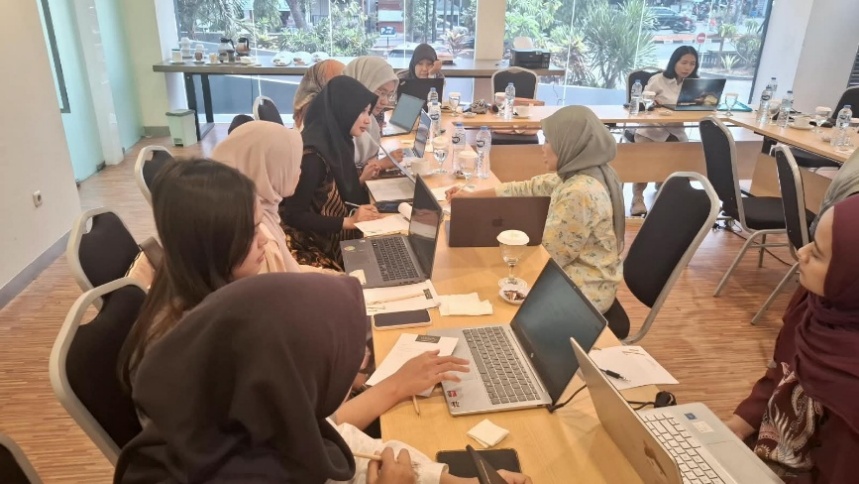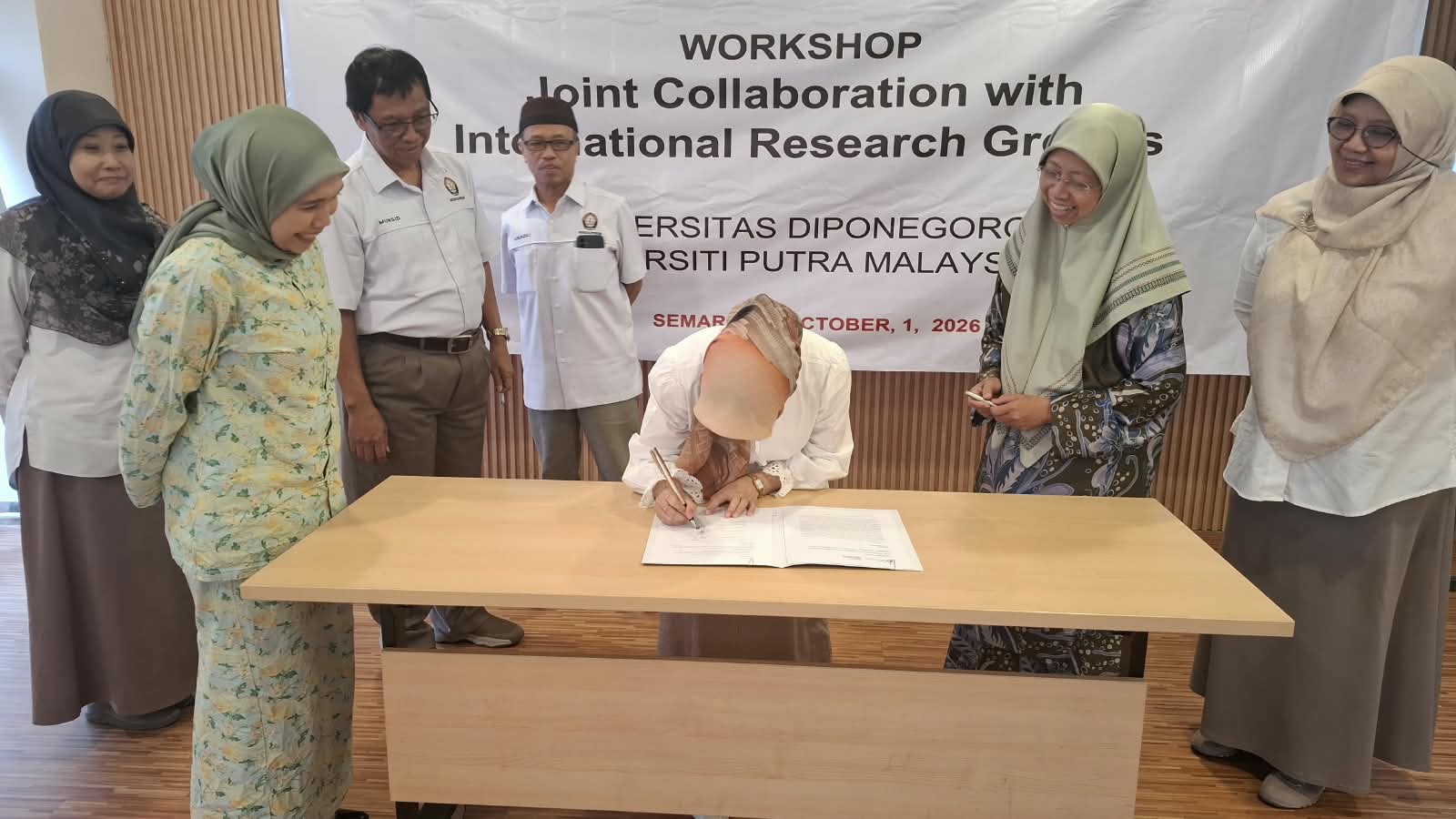
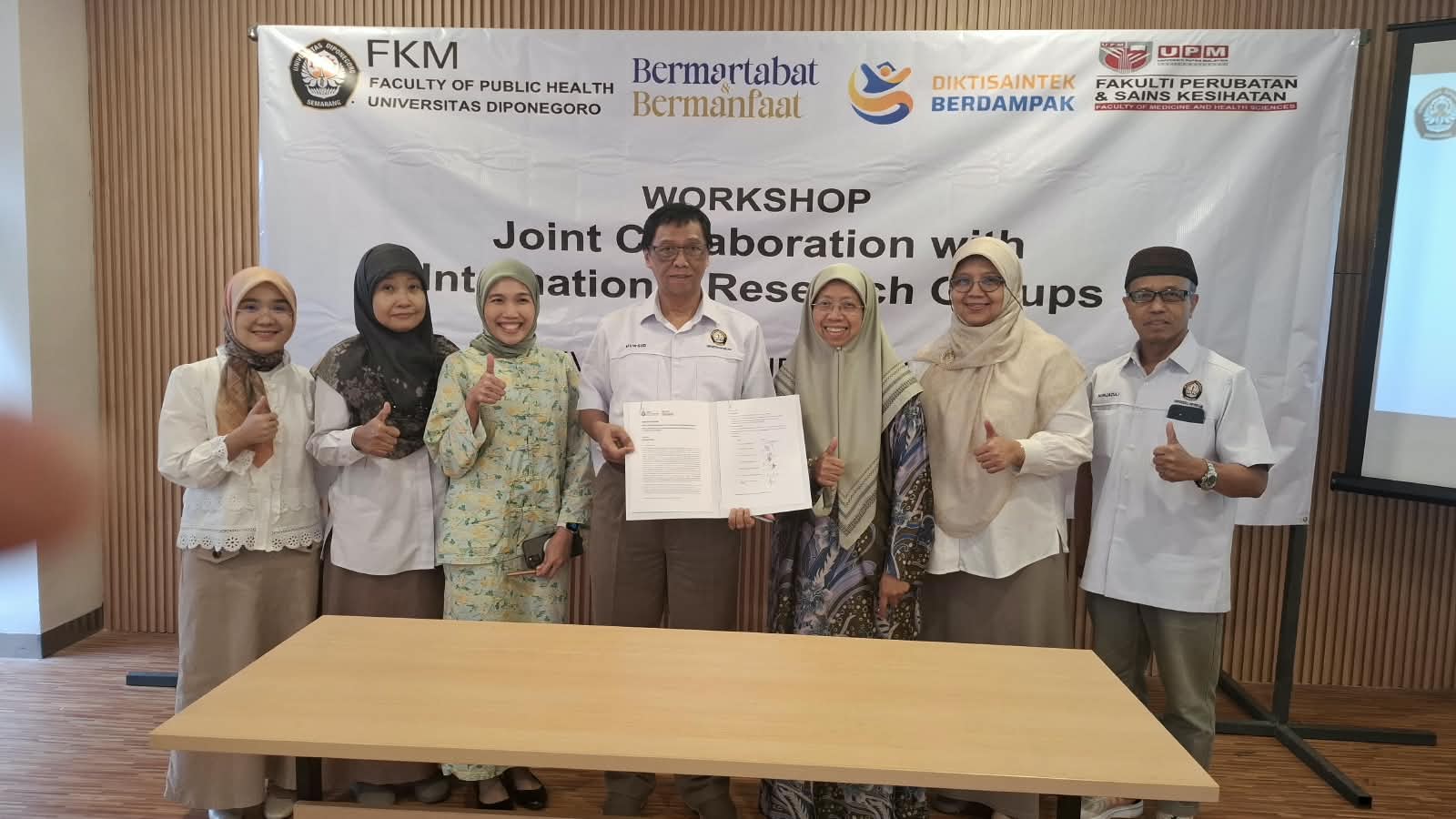
The Faculty of Public Health, Universitas Diponegoro (UNDIP), has initiated the establishment of the Southeast Asian Tropical Diseases Research Collaboration (SEATRODIC) in partnership with the Faculty of Medicine and Health Sciences, Universiti Putra Malaysia (UPM). This collaboration is one activities from the World Class University program in Faculty of Public Health Universitas Diponegoro. This initiative also presents significant opportunities for future expansion to involve the Malaysian Environmental Health Practitioners Association (MEHPA) under Prof Jamal Hisam Hasim, Universiti Malaysia Sabah (Prof Kamruddin), and other universities across Southeast Asia.
The establishment of SEATRODIC is a strategic initiative, as national borders do not necessarily align with ecological boundaries. The transboundary flow of matter and energy is influenced by global climatic factors. Haze originating from Indonesia can cross national borders into Malaysia and Singapore, illustrating how environmental and public health challenges transcend geographical boundaries and highlighting the urgent need for a coordinated regional approach to health research. ASEAN operates on the principles of non-interference, consultation, and consensus. However, in addressing health challenges that transcend national borders, SEATRODIC embraces the guiding philosophy of “One Region, One Health Destiny.”
ASEAN health cooperation is grounded in three philosophical pillars: (1) Ontological—recognizing that ASEAN member states share an interconnected tropical ecosystem, making tropical diseases a common regional health challenge; (2) Epistemological—acknowledging that health knowledge should be developed collaboratively through the “One Health” approach; and (3) Axiological—affirming that the ultimate goal of this cooperation is to establish a just and equitable ASEAN Health Community, in alignment with Section B.2 (Universal Access to Health Care) of the ASEAN Socio-Cultural Community Blueprint 2025.
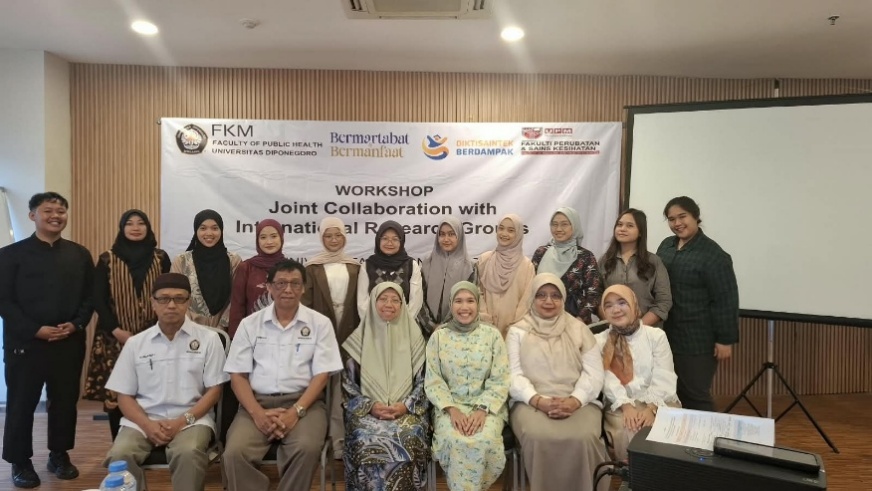
The concept of SEATRODIC was jointly developed by the Faculty of Public Health, Universitas Diponegoro (FPH UNDIP), and the Faculty of Medicine and Health Sciences, Universiti Putra Malaysia (UPM). The FPH UNDIP delegation comprised Prof. Dr. Ir. Mursid R, M.Si.; Dr. Dra. Sulistyani, M.Kes.; Dr. Yusniar HD, STP, M.Kes.; Dr. Nurjazuli, SKM, M.Kes.; and Mivtahurohimah, SKM, M.Epid. Meanwhile, the UPM delegation comprised Assoc. Prof. Dr. Malina binti Osman and Assoc. Prof. Dr. Siti Aisah binti Mokhtar.
The establishment of SEATRODIC provides an institutional platform for integrating tropical disease research that has previously been fragmented across various disciplines, including clinical research, entomology, toxicology (MDA/DEP), and predictive modeling. Furthermore, SEATRODIC serves as a hub for ASEAN-wide research collaboration, international partnerships, and cross-border biobank management. The collaborative framework of SEATRODIC is developed in accordance with the institutional autonomy principles of Universitas Diponegoro (UNDIP) and Universiti Putra Malaysia (UPM), as well as relevant ASEAN frameworks for health cooperation. This collaboration is non-political, science-based, and mutually beneficial.
In the initial phase, three research clusters have been proposed such as: 1) Environmental Biomarker Cluster (joint validation of MDA, DEP, Cholinesterase, and SOD biomarkers as predictors of susceptibility to Dengue/Malaria in Indonesia, and serving as a pesticide “Living Lab” across Thailand, Vietnam, Malaysia, and Indonesia); 2) Vector-Borne Diseases Cluster ((Dengue: outbreak prediction using XGBoost (climate + vector + MDA); Malaria: P. vivax and P. knowlesi (zoonosis) in border areas; Leptospirosis: “One Health” approach involving rice fields, rats, and farmers)); and 3) Health Systems Cluster (adaptation of cross-national systems for controlling Dengue and other tropical diseases). The scope of activities is essentially collaborative in nature, encompassing: Research (joint proposals for collaborative ASEAN research on tropical diseases, co-authorship, and publication in reputable international journals subject to approval by ethics committees in three countries); Data and Specimens (ASEAN Open Data Portal; Biobanking in accordance with Ministry of Health Regulation No. 50/2017 and the Nagoya Protocol); Human Resources (visiting professors, joint PhD programs, and field schools); Research Translation and Commercialization (products and associated royalties); and Funding (Years 1–2: start-up costs from UNDIP and UPM funds, alongside international grants or funding sources).
The conclusion drawn from this academic study is that health issues have become a global matter, spanning both ecosystems and policy frameworks. International collaboration is urgently required to enhance the university’s reputation through various activities; as a concrete follow-up, the partnership will be advanced through a collaborative program in 2027 by implementing the partnership and securing collaborative funding for joint research and publications involving UNDIP, UPM, and other partners.