

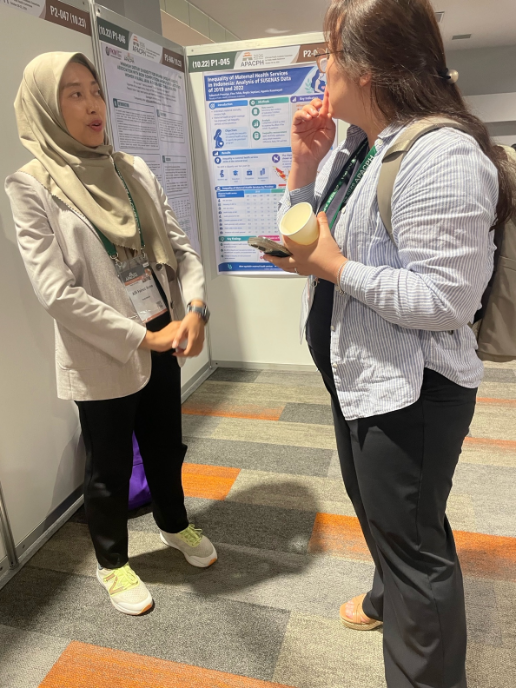
The Faculty of Public Health (FKM), Universitas Diponegoro, strengthened its international academic network through participation in The 57th Asia-Pacific Academic Consortium for Public Health (APACPH) Conference 2026. This activity was part of Universitas Diponegoro’s World Class University (WCU) programme under the International Academic Networking (IAN) scheme. The conference was held on 20–23 October 2026 in Tainan, Taiwan, with National Cheng Kung University as the host institution.
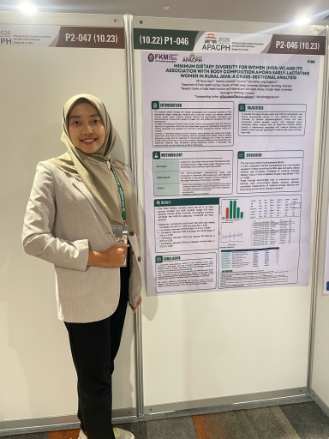
FKM UNDIP was represented by Alfi Fairuz Asna, S.Gz., MPH, from the Department of Public Health Nutrition. She presented a scientific poster entitled “Minimum Dietary Diversity for Women (MDD-W) and Its Association with Body Composition Among Early-Lactating Women in Rural Java: A Cross-Sectional Analysis.”
The study explored dietary diversity among women in early lactation and its association with body composition. This topic is relevant to strengthening maternal and child nutrition efforts, particularly in supporting maternal health during the postpartum period.
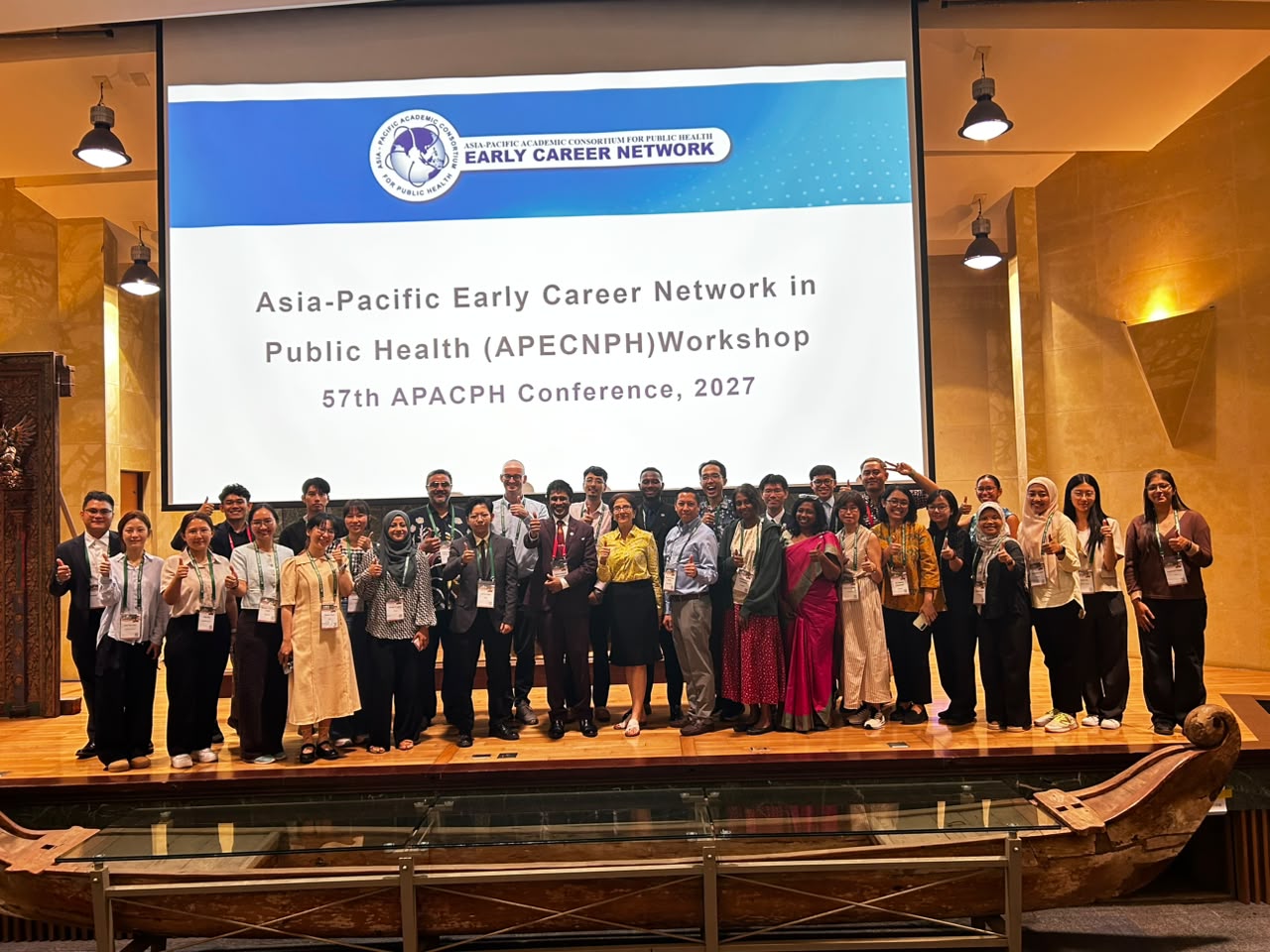
In addition to presenting the scientific poster, Asna participated in the Asia-Pacific Early Career Network in Public Health Workshop, a pre-conference workshop. The workshop provided an opportunity to expand professional networks with academics and researchers across the Asia-Pacific region and to explore potential collaboration, particularly in public health research.
APACPH 2026 carried the theme “Leveraging Healthcare Technology and Artificial Intelligence for Public Health and Wellness.” The forum brought together academics, researchers, practitioners, and public health stakeholders to exchange knowledge on innovation, health technology, artificial intelligence, and public health challenges in the Asia-Pacific region.
FKM UNDIP’s participation reflects Universitas Diponegoro’s commitment to implementing its WCU programme, particularly by strengthening international academic networks through the IAN scheme. The activity is expected to enhance the institution’s global visibility and create opportunities for collaborative research, joint publications, and cross-border academic activities.