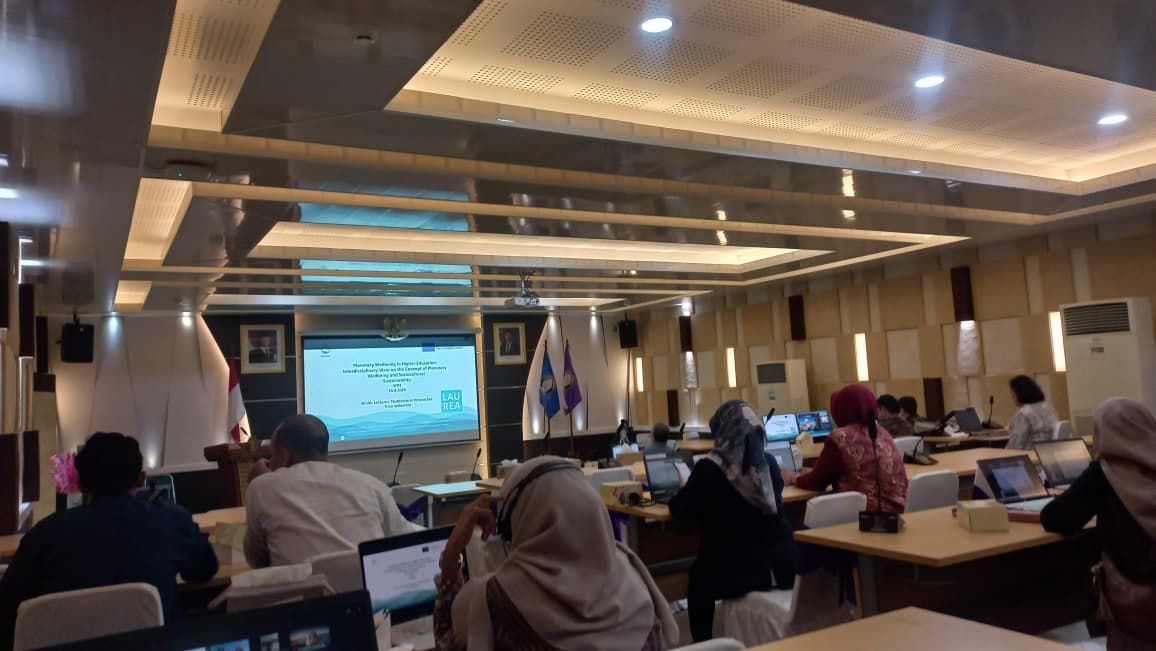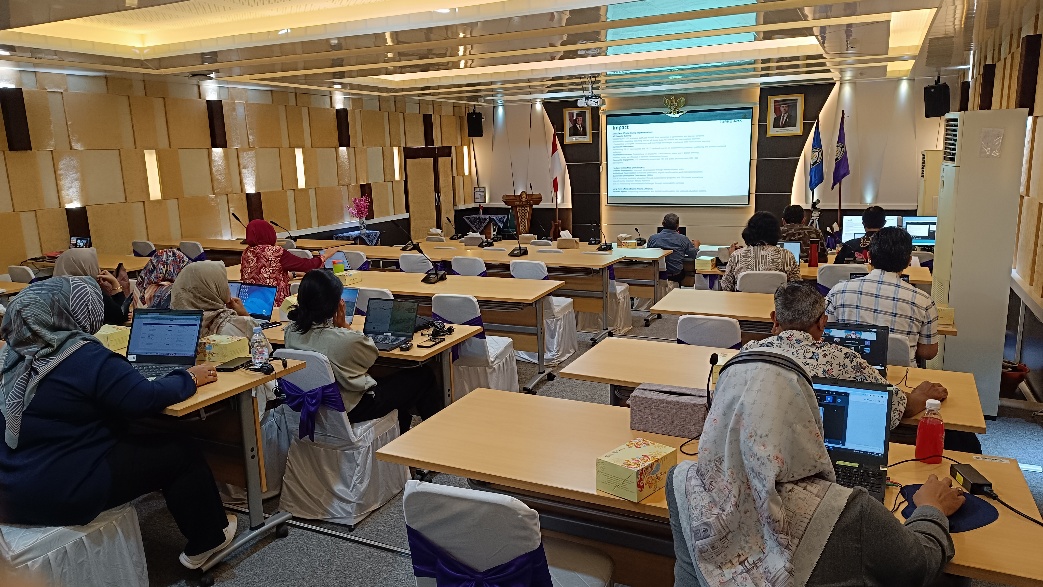
Semarang, April 15, 2026 – The Faculty of Public Health, Universitas Diponegoro (FKM UNDIP), conducted a Capacity Building Peer Group session at the FKM UNDIP Smartclass as part of its participation in the International RESHAPE Program (Regenerating Socio-Cultural Sustainability and Planetary Wellbeing in Higher Education: A Global Partnership). The activity was attended by 25 participants, consisting of lecturers, administrative staff, and members of the Faculty Quality Assurance Team (TPMF), who actively engaged in online learning sessions.
This activity is part of the Faculty Capacity Building and Strategic Development phase, which aims to enhance the institutional capacity of higher education institutions, particularly in improving the quality and relevance of education in the global era. During the program, participants took part in various sessions focusing on strengthening pedagogical and digital competencies, as well as developing adaptive and innovative learning approaches.
The materials covered a range of strategic topics, including faculty development, socio-cultural sustainability, planetary wellbeing, sustainability-based curriculum development, and the role of lecturers in the digital era. These sessions were delivered by speakers from international partner institutions such as Laurea University of Applied Sciences (Finland), University of Gävle (Sweden), and Stamford University (Bangladesh). In addition to presentations, the activity also featured interactive discussions that provided participants with opportunities to exchange experiences and ideas for local implementation. At this moment, the material is presented by online. However, this activity will be followed up with engaging, hands-on benchmarking at Turku University (Finland), the University of Gävle (Sweden), and Laurea University of Applied Sciences (Finland).
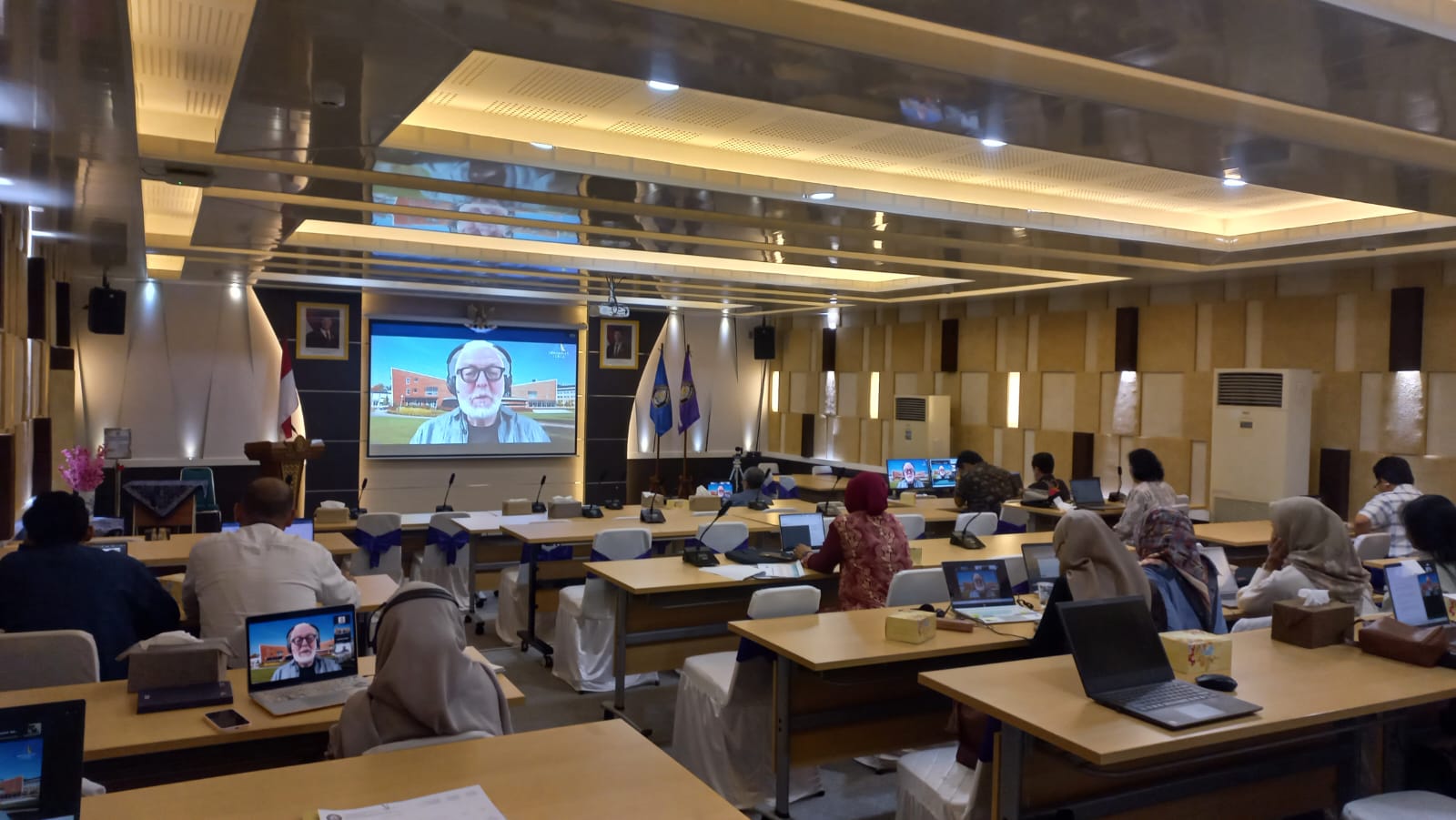
Through this activity, FKM UNDIP demonstrates its commitment to supporting the achievement of the Sustainable Development Goals (SDGs), particularly Goal 4 (Quality Education). Planetary wellbeing itself is a new learning concept where the curriculum integrates various fields of science, including public health in relation to social and ecosystem aspects. The RESHAPE program is supported by the Erasmus+ initiative of the European Union, and is expected to strengthen inclusive, innovative, and sustainable learning practices in higher education.