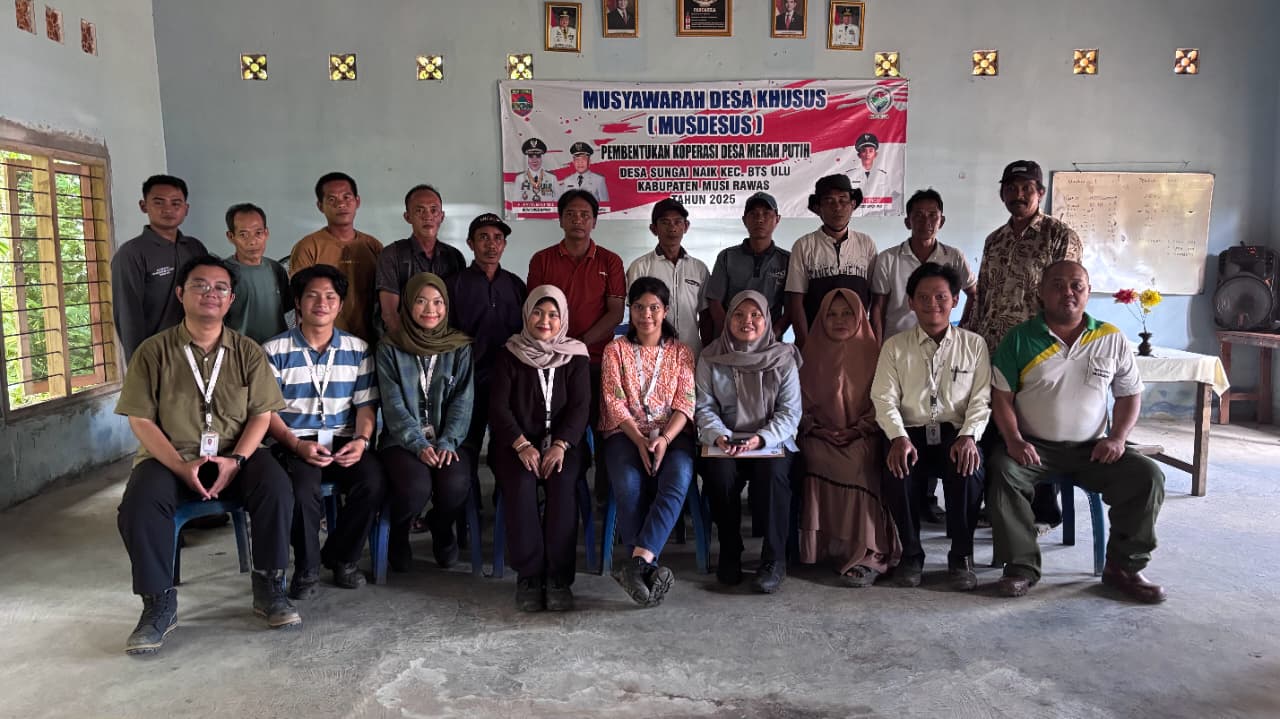
Tuesday, August 26, 2025 Team I of the Undip Patriot Expedition set foot in Musi Rawas Regency, South Sumatra. The team, led by Anis Kurniasih, ST, MT and consisting of Gabriel Julian Yogananda, S.Sos., Vania Gustiansyah, SPWK, Dyfan Putra Perkasa, ST, and Hanna Mutiara Debora Nainggolan, was placed at the Simpang Rimau-Muara Kelingi locus, Musi Rawas Regency, South Sumatra with the main mission to conduct research and mapping the real conditions of the Simpang Rimau Transmigration Area, collect DIM (Problem Inventory List), and evaluate the potential of the transmigration area. The final results of the research will be included in the Area Evaluation Recommendation Document which is expected to be a reference for local governments in designing policies in all sectors so that the development of the transmigration area can be directed inclusively, based on real research, sustainable, and paying attention to the original potential of the region.
The Patriot Expedition Program was initiated by the Ministry of Transmigration as an effort to contribute to the success of one of President Prabowo’s main goals, namely transmigration reform. The new paradigm of transmigration no longer permits the relocation of groups of people from densely populated areas to new, sparsely populated areas. This paradigm redefines transmigration as a research-based process of knowledge transfer to develop transmigration areas into new economic centers. This paradigm, if traced further, will ultimately lead to national food security.
In line with the aforementioned vision, the Undip Patriot Expedition I Team explored 20 villages in Muara Kelingi District and 19 villages in BTS Ulu District. These two districts were chosen as the locations for this expedition because—over the 25 years since the transmigration area’s establishment—many challenges remain unresolved. Infrastructure and the economy remain a shared responsibility in this region.
Localizing with the Community
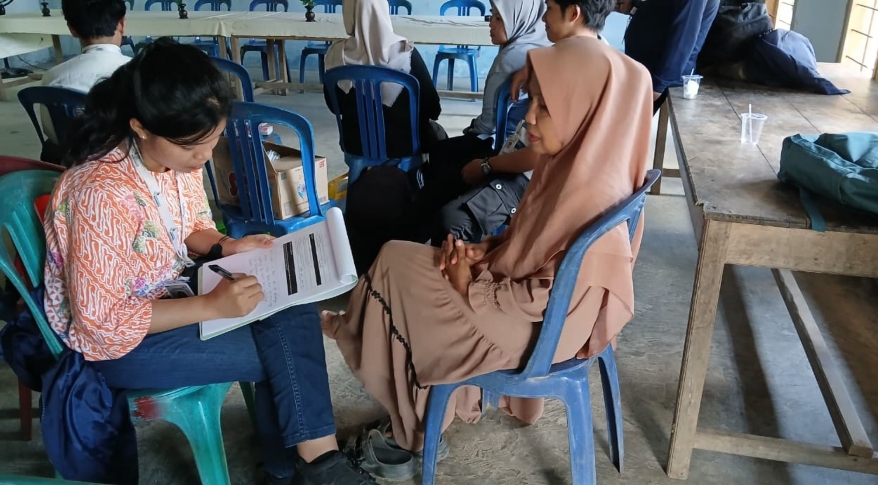
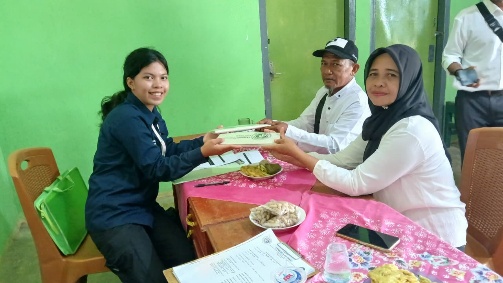
Brainstorming began with studying the transmigration areas through available secondary documents. The next step, Team I went into the field and traveled to 20 villages to conduct interviews and direct observations of the socio-cultural, economic, infrastructure, and institutional conditions in each village. These observations and interviews aimed to understand the foundations of community life, such as access to clean water, access to education, observing the condition of roads, bridges, and housing, sanitation conditions, observing residents’ livelihood patterns, and various other matters. The team also took the time to discuss with local residents to understand their concerns and hopes regarding the current condition of the village. These observations and interviews were welcomed by the village government, which also provided the data needed by the team.
Infrastructure is the most pressing issue to address. Many villages lack proper road access. Red dirt and gravel are passable only when dry. When it rains, these roads are completely impassable. Yet, roads are vital for the community’s economic growth. Many gardens and certain villages are accessible only by motorbike. In fact, some villages are accessible only via suspension bridges. Cars cannot enter these villages. Adequate roads must be a primary concern for local governments, as they can boost economic growth and reduce travel costs and time.
Besides road access, other infrastructure and public facilities also pose challenges that must be addressed immediately. One village in the southernmost corner of Muara Kelingi District still struggles to access the internet. Not a single internet tower has been built in the village. Residents are forced to use Starlink, funded by self-funding, to access the internet. Yet in this technologically advanced era, internet access is a vital pillar of daily life. Almost all village development information requires internet support. The team even struggled to communicate with the village head via WhatsApp.
Considering the conditions of the existing villages, the Patriot Expedition is expected to bridge the gap between the challenges faced by the community and targeted solutions. Before discussing transmigration areas as new economic zones, there are real problems that must be resolved to support economic growth and community welfare. Problems that have not been fully resolved since the transmigration areas were opened. Borrowing the famous adage that says “education should not make someone stay in an ivory tower, but should graze in society” which is in line with the vision of UNDIP with Dignity UNDIP Useful, the Patriot Expedition is a witness to Undip’s commitment to continue to benefit the community’s welfare and national development.