

Semarang, September 27, 2025 – The Faculty of Health, Universitas Diponegoro (UNDIP) held a community service activity that focused on strengthening food security and environmental health in Tugurejo Village, Tugu District, Semarang City. This activity was held in response to coastal environmental challenges, especially the impact of climate change, flash floods, as well as the increased risk of vector-borne diseases and water-based diseases in the region.
The coastal area of Tugurejo is known to be highly vulnerable to flash flooding, coastal abrasion, and land subsidence, which directly impacts the economy of residents and increases the potential for environment-based diseases. Through this program, UNDIP initiated training in mangrove honey bee cultivation and the control of vector-borne diseases, such as dengue fever and leptospirosis, with community-based solutions and nature-based solutions.
Documentation of the first day of community service with residents of Tugu Village, Tugu District, Semarang City
The activity, which took place on September 26-27, 2025, presented experts from Universitas Diponegoro, the Semarang City Environmental Office, the Karanganyar Health Center, the Indonesian Bee Beekeeping Association (API), as well as international collaboration with Universiti Sains Malaysia. The training was attended by coastal residents, health cadres, youth groups, and fishermen groups with a target of a minimum of 20 participants. Participants gain skills in honey bee cultivation, maintenance, and post-harvest, as well as termites, bed bugs, and cockroaches control techniques using environmental innovations.
In addition to increasing community capacity, it is hoped that this activity will also result in the formation of a fostered group for managing mangrove honey bees, the first harvested mangrove honey products, and prototypes of recycling-based insect traps. Training modules and documentation videos are also produced as a means of continuous learning. The average knowledge score of participants increased significantly after participating in a series of activities, strengthening coastal communities’ preparedness to face the impacts of climate change and improving the quality of life.
Dr. Ir. Martini, M.Kes, as the person in charge of the activity said, “This program is a strategic step that integrates economic, health, and environmental aspects so that coastal communities are more resilient to climate change, while improving living standards through sustainable natural resource management.”
The Faculty of Health UNDIP hopes that this community service program can be a model of innovation and cross-sector collaboration for other coastal areas in Indonesia.
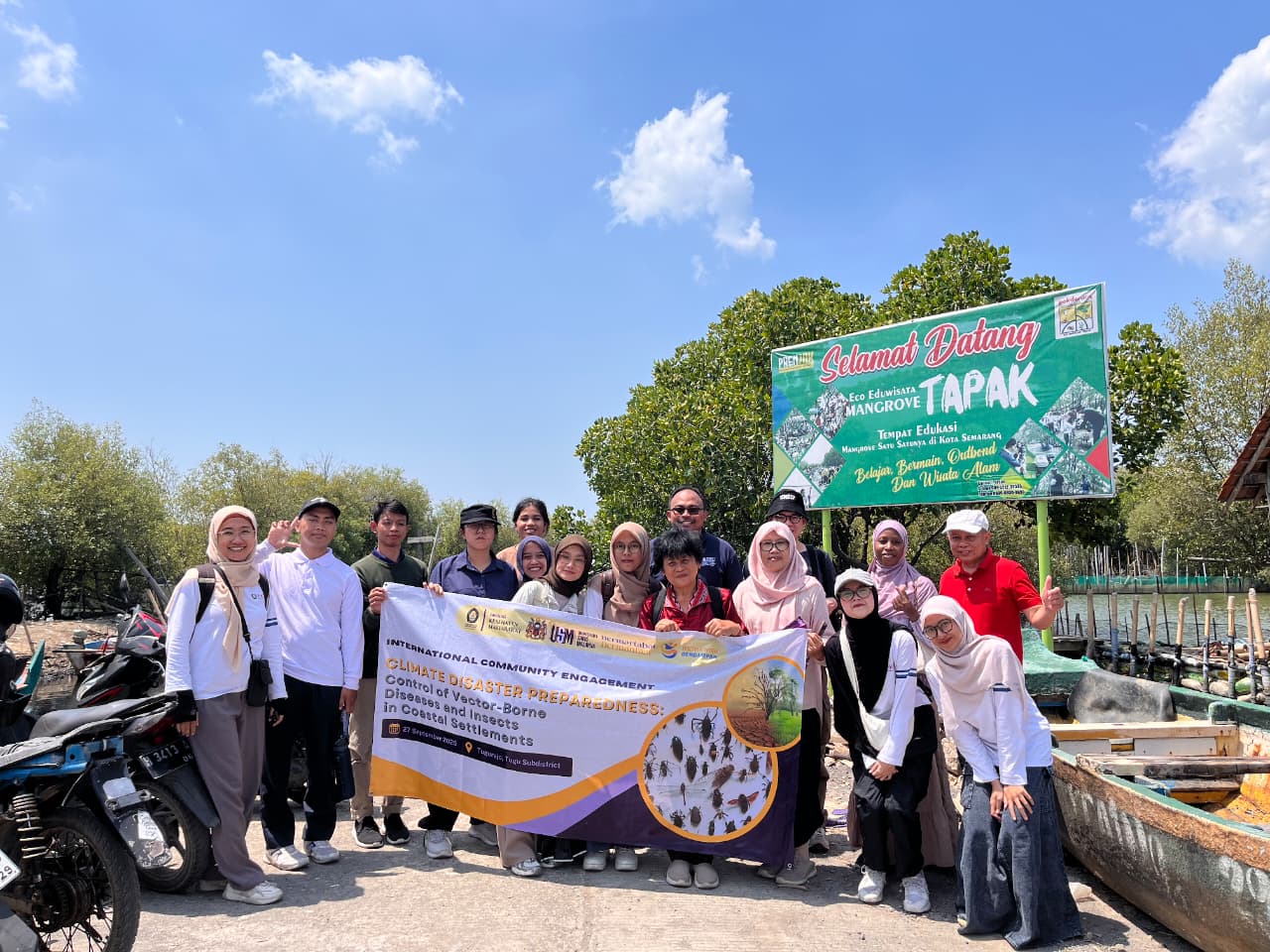
Documentation of the second day of community service activities at Mangrove Tapak to see the potential of mangrove honey directly.