

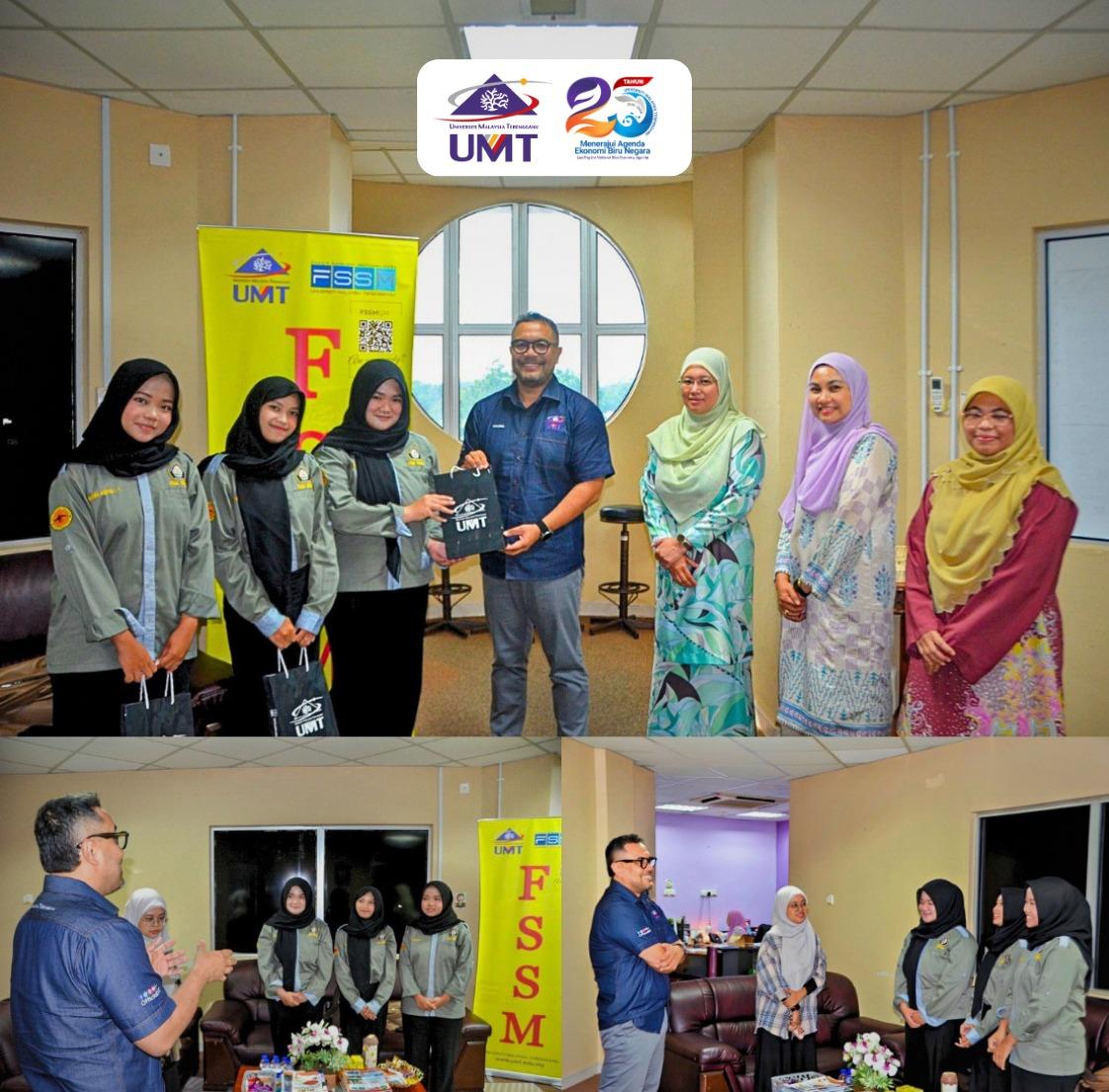
Kuala Terengganu, Malaysia – Students from the Faculty of Public Health (FPH), Universitas Diponegoro (UNDIP), participated in an International Student Mobility program entitled “Internship on Enhancing Skills in Stingless Bee Studies: Taxonomy, Biodiversity, Colony Management, and Foraging Behavior” at Universiti Malaysia Terengganu (UMT), Malaysia, from 23 to 30 August 2026. The program was conducted under UNDIP’s Students Go International (SGI) initiative, with financial support from Universitas Diponegoro’s World Class University (WCU) program. It aimed to enhance students’ academic competencies, practical skills, and international experience, particularly in the field of public health entomology.
The program was attended by three FPH UNDIP students, namely Marina Alawiyah Indra Putri, Nasywa Rahma Azalia, and Tiara Aurelia Putri, whose academic interests are in Health Entomology. Throughout the program, participants engaged in a series of academic activities and field-based practical sessions under the supervision of Assoc. Prof. Dr. Wahizatul Afzan Azmi from Universiti Malaysia Terengganu. They had the opportunity to explore various aspects of stingless bees, including taxonomy, biodiversity, colony management, and foraging behavior through laboratory training, academic sessions, and field visits.
At the beginning of the program, the students participated in an orientation and introduction to the UMT campus, including its laboratory facilities and research sites. They also attended knowledge-sharing sessions with UMT academics covering stingless bee research, as well as topics related to virology and medical entomology. These sessions provided foundational insights into entomological research and its relevance to public health.
The participants subsequently took part in a field visit to the Meliponiary in Kuala Terengganu, where they interacted with local beekeepers, observed flora and nesting habitats, and learned about the colony structure of stingless bees. In addition, the students gained practical experience in honey quality analysis, covering the introduction to honey quality standards, sample preparation and handling, and the measurement of several physicochemical parameters, including moisture content, pH, total soluble solids (°Brix), and colour.
Technical skills were further strengthened through the Basic Workshop on Stingless Bees. During this workshop, participants learned about the fundamental concepts, ecological roles, and taxonomy of stingless bees, as well as an introduction to meliponiculture, or stingless bee cultivation. Practical laboratory sessions involved specimen observation and insect preparation techniques, including pinning, spreading, drying, and mounting. The students also gained experience in sample collection and handling techniques to support insect identification and biodiversity studies.
The program continued with field visits to Taman Pertanian Sekayu, Ladang Kelapa Bukit Chempaka, and Kenyir UMT Research Station. Through these visits, the students had opportunities to explore environmental conditions, observe potential stingless bee habitats, and understand the relationship between biodiversity and ecosystem sustainability.
The knowledge and experience gained through this program are expected to enhance the academic capabilities, practical skills, and research perspectives of FPH UNDIP students, particularly in Health Entomology. Furthermore, the knowledge acquired is expected to be disseminated within the UNDIP academic community and serve as a foundation for future student research development. This program also represents an effort to strengthen international collaboration between Universitas Diponegoro and Universiti Malaysia Terengganu in education, research, and scientific development, while supporting UNDIP’s internationalization agenda and its vision of becoming a World Class University.