


Semarang, Indonesia – The Department of Health Promotion and Behavioral Sciences (PKIP), Faculty of Public Health (FPH), Universitas Diponegoro (UNDIP), successfully organized a series of UNDIP Global Classroom (UGC) sessions during the second semester of the 2025/2026 academic year. The program was conducted with the support of the World Class University (WCU) Program of Universitas Diponegoro as part of the university’s commitment to strengthening the internationalization of teaching and learning.
Throughout the semester, the PKIP Department welcomed four distinguished international academics from Bangladesh and Thailand to share their expertise and experiences on current public health issues from health promotion and behavioral science perspectives.
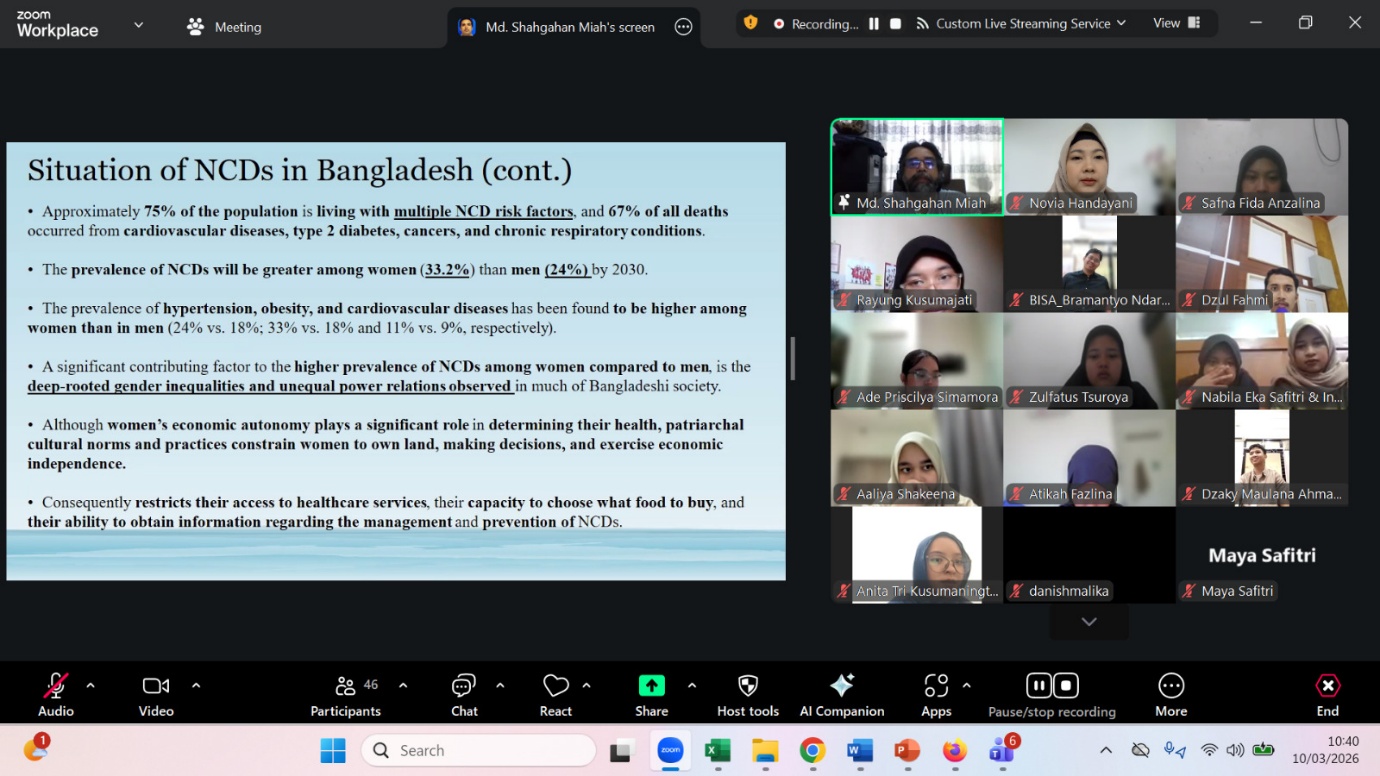
The first session featured Md. Shahgahan Miah, Ph.D. from Bangladesh, who delivered a lecture entitled “Current Issues of Non-Communicable Diseases (NCDs).” Drawing upon his expertise in public health and medical anthropology, Dr. Shahgahan discussed the growing burden of NCDs in developing countries and highlighted the importance of understanding cultural and behavioral factors in disease prevention and health promotion.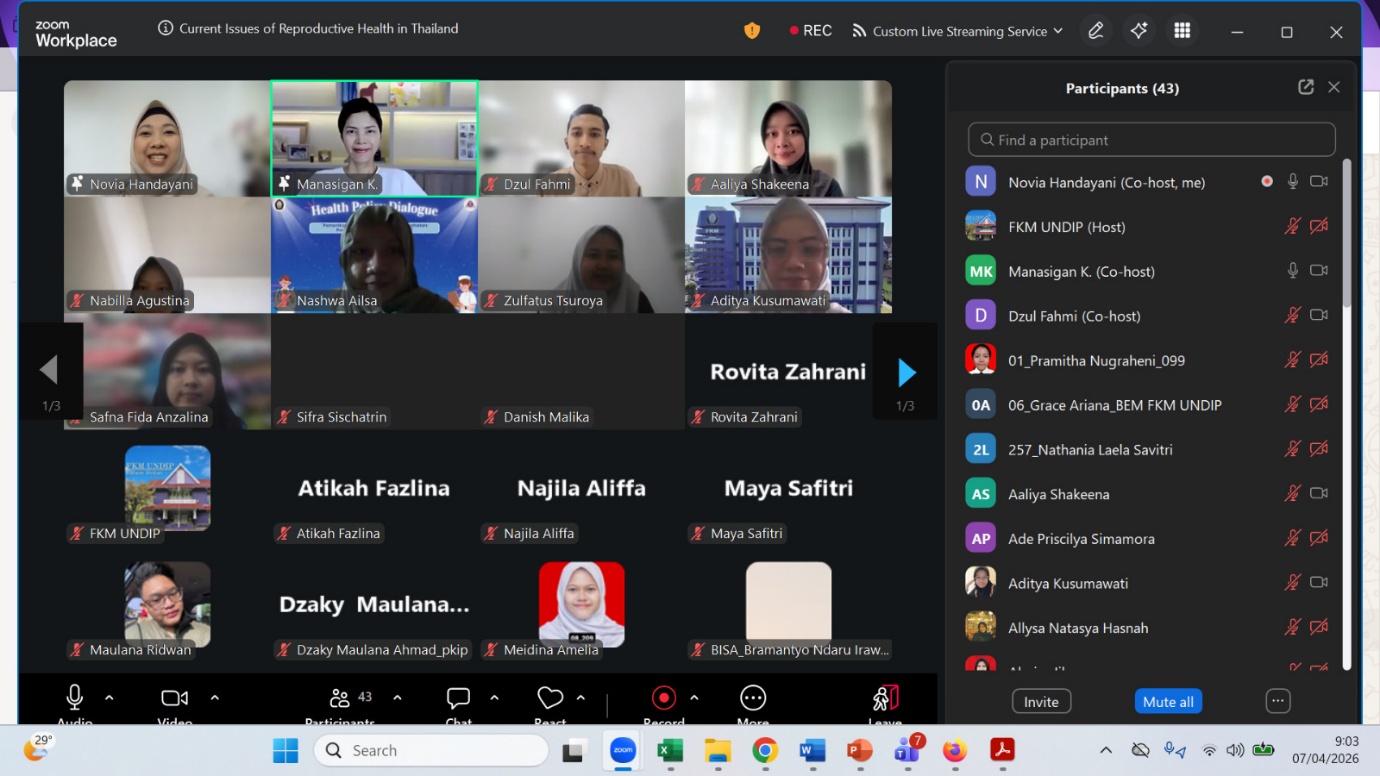
The second session was delivered by Ajarn Manasigan Kanchanachitra, Ph.D. from the Institute for Population and Social Research (IPSR). Her lecture, “Current Issues of Reproductive Health in Thailand,” provided students with valuable insights into contemporary reproductive health challenges, policy responses, and health promotion strategies implemented in Thailand. The session also emphasized the importance of evidence-based interventions and population perspectives in improving reproductive health outcomes.
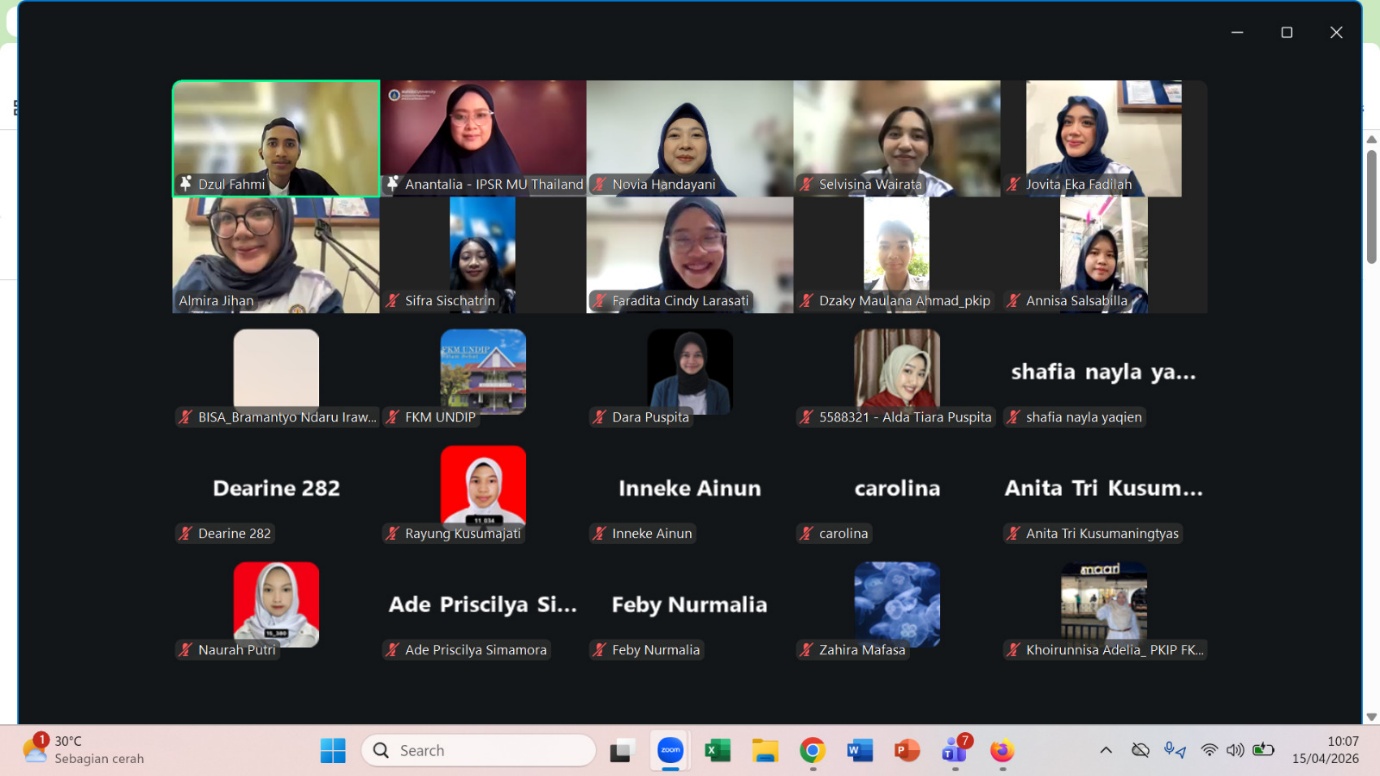
The third guest lecturer was Ajarn Dyah Anantalia Widyastuti, Ph.D., also from the Institute for Population and Social Research (IPSR). During her session, she shared perspectives on public health challenges and health promotion practices in Southeast Asia, emphasizing the importance of interdisciplinary approaches, community engagement, and evidence-based policymaking in addressing contemporary health issues.
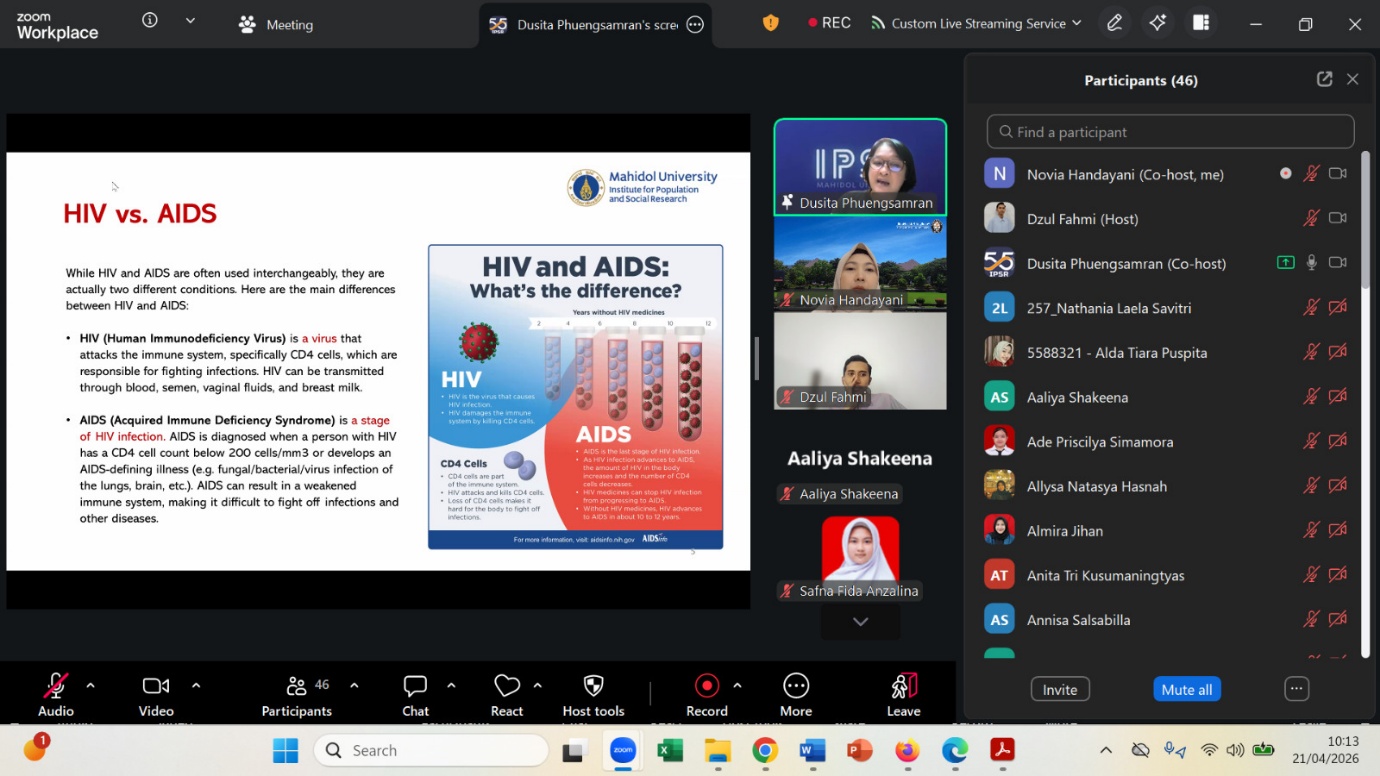
The final session featured Dr. Dusita Phuengsamran, Deputy Director for International Relations and Organizational Communication at the Institute for Population and Social Research (IPSR). She presented “Current Issues of HIV/AIDS in Thailand,” discussing the current HIV/AIDS situation, national prevention strategies, and community-based approaches that have contributed to Thailand’s achievements in HIV prevention and control.
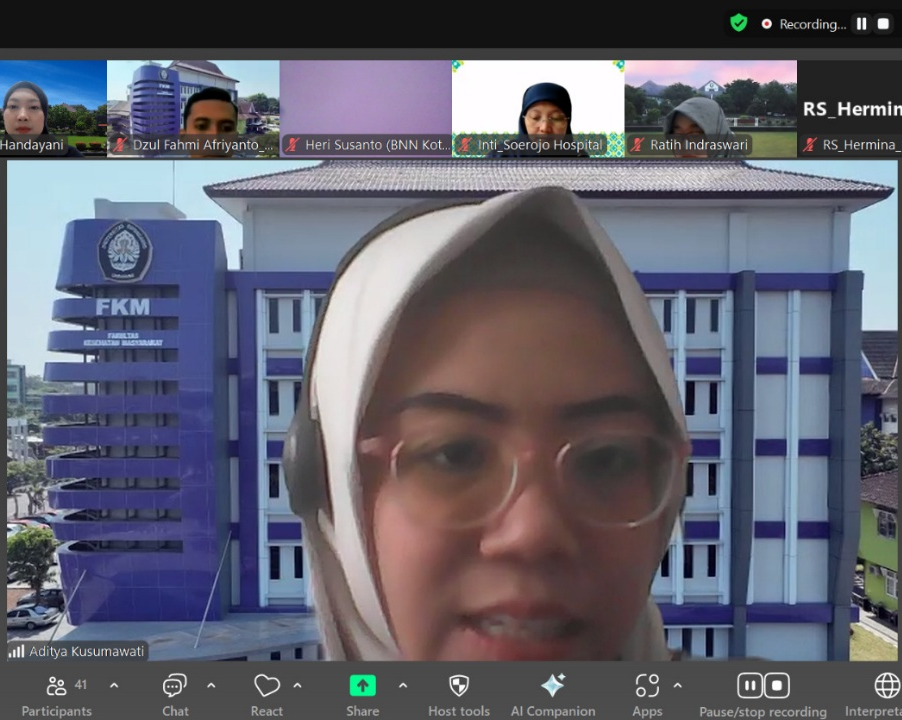
The UNDIP Global Classroom program received enthusiastic participation from undergraduate students of the Public Health Study Program. Through direct interaction with international academics, students gained broader global perspectives, enhanced their understanding of contemporary public health issues, and strengthened their academic communication skills in an international learning environment.
The implementation of this program reflects the commitment of the PKIP Department to providing high-quality, internationally oriented learning experiences. Beyond enriching classroom learning, the program also serves as a platform for strengthening academic networks and fostering future collaboration in education, research, publications, and academic exchange between FPH UNDIP and its international partners.
Supported by the World Class University (WCU) Program, the successful completion of these four UNDIP Global Classroom sessions demonstrates FPH UNDIP’s ongoing efforts to promote internationalization and prepare students to become globally minded public health professionals capable of addressing complex health challenges in an increasingly interconnected world.